Hand Holding Flowers
As an embroidery designer and product reviewer, I’ve evaluated countless machine embroidery designs. Hand Holding Flowers stands out for its charm and versatility, but it’s not a one-size-fits-all solution. This design is perfect for adding a whimsical touch to custom apparel, home decor, and personalized gifts—but it requires careful consideration when choosing fabric, hoop size, and stitch density.
The First Impression: Whimsy with Purpose
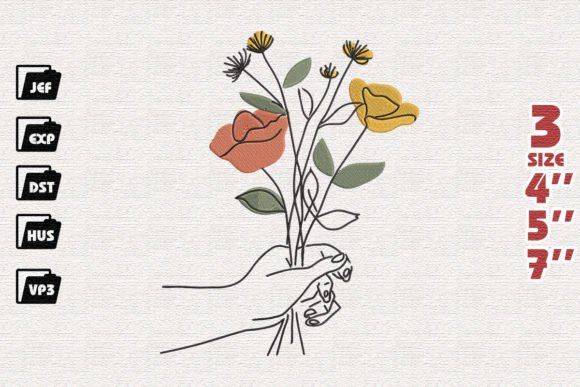
Hand Holding Flowers immediately evokes a sense of softness and playfulness. The design features delicate flowers held by a pair of hands, creating a visual that feels both artistic and approachable. It’s ideal for projects targeting a youthful or romantic aesthetic, such as baby clothes, bridal accessories, or holiday gifts. The layout is balanced, with enough detail to be visually engaging without being overwhelming.
This embroidery file would thrive on light-colored fabrics where the thread colors can pop. It’s not the best choice for dark backgrounds unless you’re using high-contrast thread shades. The design’s structure makes it suitable for applique design elements, but it also works well as a standalone satin stitch or fill stitch piece.
Real-Life Use: From Tote Bags to Baby Onesies
Imagine preparing a custom embroidered tote bag for a client who wants something unique. Hand Holding Flowers could be a standout feature, especially if the bag is made from a medium-weight cotton. The design’s size and shape make it easy to place in the center of the bag, where it can draw attention without feeling cluttered.
For sweatshirt embroidery, this design would work well on the front or back, depending on the garment’s style. However, it’s important to consider the fabric texture. On stretchy or thin materials, the design might not hold up as well, requiring extra stabilizer and careful stitching techniques.
When it comes to baby items, like onesies or blankets, Hand Holding Flowers adds a gentle, personal touch. It’s a great option for personalized gifts, but the details need to be clear and consistent. Tiny lettering or intricate corners could be problematic, so testing the design on scrap fabric is crucial before committing to a final project.
Where to Be Cautious: Design Limitations
While Hand Holding Flowers is charming, it may not be the best fit for every project. Small hoop sizes can cause issues with the design’s overall flow, especially if the pattern is too large for the space. Textured fabrics, such as knits or woven blends, may alter the appearance of the stitches, making the design look less crisp.
On thin or stretchy fabrics, the design might pucker or distort. Using the right stabilizer is essential to prevent this. For curved surfaces like caps or hats, the design’s placement and stitching direction matter. If the design is too dense, it could feel stiff or uncomfortable when worn.
Dense stitch areas, such as those found in fill stitch sections, can cause the fabric to become rigid. This might not be an issue for decorative items, but it could affect the comfort of wearable pieces like t-shirts or aprons. Always check the stitch density and adjust as needed for the intended use.
Impact on Visual Appeal and Customer Perception
Hand Holding Flowers has the potential to elevate a handmade product or commercial embroidery project. Its visual appeal lies in its simplicity and charm, which can translate well into a variety of applications. When executed properly, it adds value to a finished product, making it more attractive to buyers looking for unique, personalized items.
For small shop products or Etsy listings, this design can serve as a strong visual hook. Customers often respond positively to whimsical, handcrafted elements, and this embroidery design offers just that. It’s also a good fit for printable mockups and digital product previews, helping sellers showcase their offerings effectively.
From a brand consistency perspective, Hand Holding Flowers can be used across multiple product lines, such as holiday gifts, boutique merchandise, or craft fair items. Its versatility allows it to fit into different themes while maintaining a cohesive look.
Practical Designer Notes: What to Check Before Using
Before using this embroidery file in your next project, there are several practical steps to take. First, test the design on scrap fabric to see how it looks and behaves. This will help you identify any issues with stitch density, thread color contrast, or fabric compatibility.
Review the stitch count and file format to ensure it matches your embroidery machine’s capabilities. While specific details like hoop size or file formats aren’t provided, it’s always wise to confirm these before starting a project. Also, check whether the design works for both personal and commercial use, and review the licensing terms if you plan to sell finished items or digital products.
When working with this design, pay close attention to the details. Small corners, tiny lettering, or layered elements can be tricky to execute. A black and white mockup can help you visualize how the design will look on different fabric backgrounds. Comparing the design on light and dark fabrics can also guide your thread color choices.
Finally, always use the proper stabilizer for the fabric you’re working with. This ensures the design stays in place and maintains its integrity through washing and wear. Whether you’re creating an embroidered patch, a custom apparel piece, or a holiday gift, these steps will help you achieve the best results.
Final Thoughts: A Versatile Addition to Your Design Library
Hand Holding Flowers is a machine embroidery design that brings a unique blend of charm and functionality to your projects. It’s ideal for creative entrepreneurs, crafters, and small business owners looking to add a whimsical touch to their handmade products or commercial embroidery work.
While it has some limitations, especially when it comes to fabric type and hoop size, it’s a valuable addition to any design library. With proper planning and execution, it can enhance the visual appeal of your products, boost customer engagement, and contribute to a more professional and cohesive brand presence.